The G.O.A.T. Didn't Start the Great Depression (Part 2)
He was just the scapegoat who got blamed.
Content advisory
This article contains basic economics.
Several sacred cows wander into traffic.
Side effects may include disagreeing with yourself.
This is a story about adults who think money grows on trees, and the boy president who told them to grow up.
Part two is free.
Fun + Free = Cool Cal
President Cool Cal … that is.
Before we dive into the boy who became president, let’s do a short, not-boring lesson in economics.
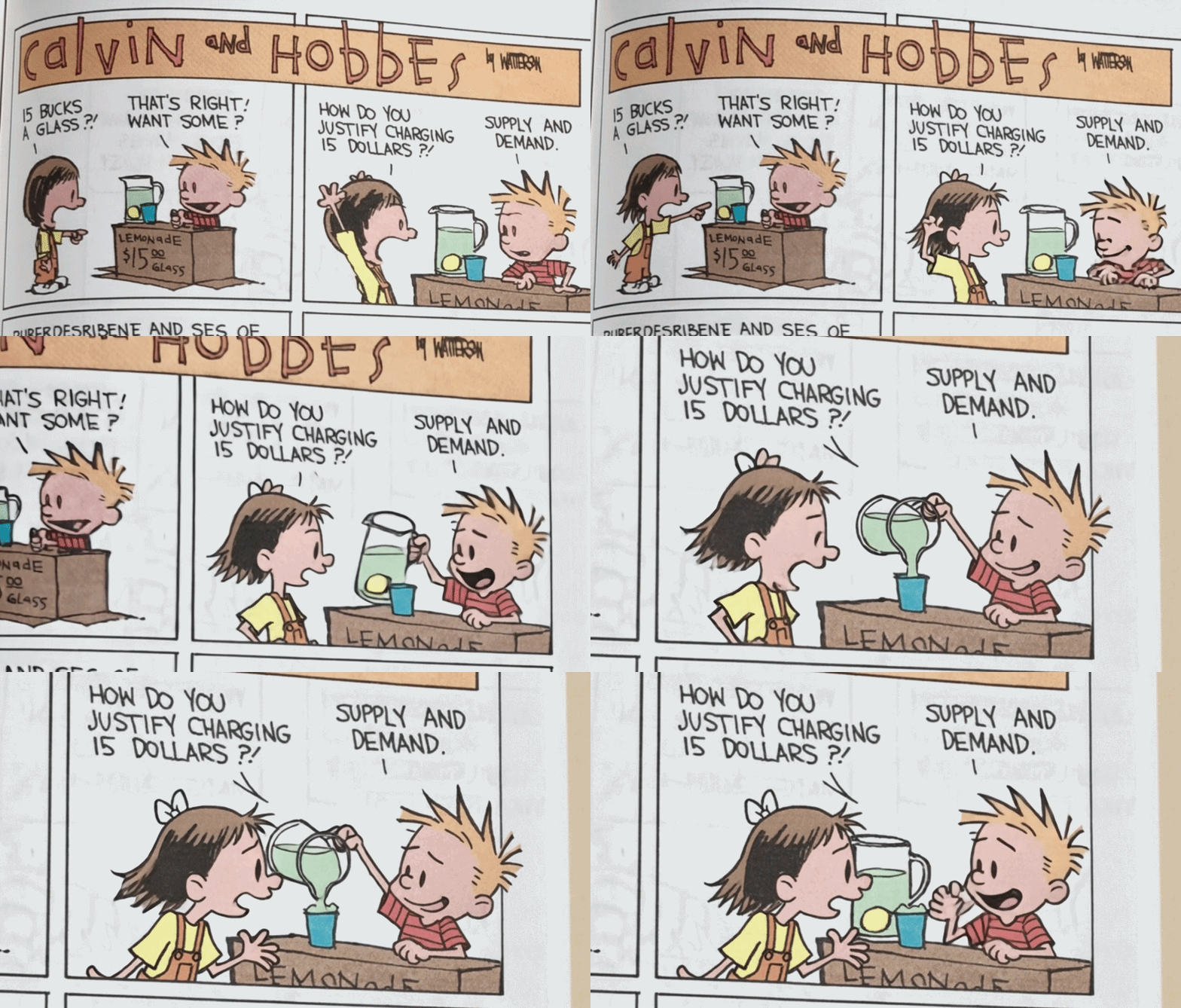
If Bill Watterson can teach supply and demand in a few panels, hopefully you can survive five minutes of economics together.
“I favor the policy of economy, not because I wish to save money, but because I wish to save people.” ~President Cool Cal
A Conflict of Interest
Most public high schools don’t teach economics. If they did, we would understand scarcity and discover that Big Gov’s a giant Ponzi scheme. Therein lies the conflict of interest — double entendre intended.
The problem of interest is that it can’t keep up with inflation.
The problem with teaching economics is that it would lead to civil unrest. Our overlords don’t want us to understand their crimes.
Ponzi Scheme: fraud that pays older investors with new investors’ money.
Social Security funds will vanish in 2032, one year sooner than predicted. Our Grifter in Chief’s Big Beautiful Bailout shaved off a year.
The State’s solution is to keep us fat and “happy.”
“Pass the cheesy puffs!”
“Sportball!”
“Bash his brains!”
“Who’s brains?”
“His brains!”
“Why?”
“Because … he’s WEARING PURPLE!”
Am I making cents? If not, it’s OK.
You don’t have to drink my Kool-Aid to get on my bus.
You can be Left or Right or righteous.
You can be Red or White,
Tangled up in Blue.
Be whatever you want.
Just be you
and know…
“Education begins when you leave school.” ~Robert Kiyosaki
Economics 101
“The first lesson of economics is scarcity – there is never enough of anything to satisfy all those who want it. The first lesson of politics is to disregard the first lesson of economics.” ~Thomas Sowell

The irony is that all those who blame the Great Depression on President Coolidge are the same people making fiat currency, a.k.a. Monopoly money. To them, scarcity isn’t a problem. It’s a print job.
To them, money isn’t scarce. It grows on trees. It is the tree. Cut the rainforest and call it growth. Monetary expansion. Fuck oxygen. Who needs trees?
Big Gov needs dollars. The dollar is what we call in the biz a fiat currency.
Fiat /fee-aht/ - Latin for “because I said so.”
Therefore, dollars don’t have any inherent value unless you burn them for warmth. Speaking of which…
Fun Trivia
In 1923, Germans burned stacks of banknotes in stoves for heat, because firewood cost more than the cash. Burning banknote bricks was faster than hauling a wheelbarrow of bills to the store to buy a log. Children built Lincoln “Log” towers out of the “bricks” because they were cheaper than toys. Kids began calling their piggy bank the Lego bucket. Family budgets included a line item for “play money,” but it was just a joke. It was real money.
Eighty-five years later, Zimbabwe hit peak inflation at 79.6 BILLION percent a month. It’s a number that stops meaning anything after four zeros. A Freakonomics writer worked out the cost per sheet of toilet paper: about $0.004, or roughly 3,600 Zimbabwe dollars. A Z$1,000 note was worth less, so good stewards of their money would look in their wallet before asking, "Honey, are we out of toilet paper?"
Everyone older than 50: “Why does Bitcoin have value?”
That’s a rabbit hole, but in a word: Scarcity. There’s a limit. There’s a strict, hard-coded maximum supply of exactly 21 million coins.
Allow me to flip the question. Why does the dollar have value?
“Because they say so” isn’t a good answer, but it’s the correct one. The best answer is that we can all wipe our asses with federal fiat.
Monetary expansion (a.k.a. currency debasement) during the roaring 20s caused the Great Depression.
Which brings us back to our part one finale. Let’s rewind and recap the “great” depression that never happened.
When Washington Got Out of the Way
When Harding and Cool Cal took office in 1921, the country was already in a full-blown depression, with unemployment at 12 percent. GDP cratered. It was a royal mess.
So what did they do? They pulled a George Costanza and did THE OPPOSITE of what modern politicians instinctively do. They cut spending in half, slashed taxes, paid down the debt, and got the hell out of the way.
The depression was over in 18 months.
When Harding died, Cal was back in Washington within 24 hours. On day one, it was knives out. Deep cuts with zero patience for dissenters. Coolidge regarded a good budget as “among the noblest monuments of virtue.”
Under Cal’s administration:
Unemployment fell from 12 percent to 3 percent¹
U.S. industrial production rose roughly 20%²
Real GDP expanded to 4% annually, more than double the average for the early 20th century³
My man.
Why Does Coolidge Take the Heat?
So if the playbook worked in 1921, why did the Depression happen on Cal’s watch?
It didn’t. It happened during Hoover’s.
Cal was never a fan.
“That man has offered me unsolicited advice for the past six years, all of it bad.”
Hoover was a sock puppet. The real criminals pulling all the political strings are the banks running the Federal Reserve – the same grifters I wrote about in The Greatest Theft in History.
While Cal was cutting spending and paying down debt, the Fed was quietly doing the opposite with monetary policy. “Quietly” because it’s been their M.O. from its inception.
The 1913 Federal Reserve Act was not drafted by congressmen. It was created by bankers, for bankers at a clandestine meeting on Jekyll Island, Georgia. Sounds like a Gothic Horror flick. We’ll call it Jekyll & Hide.
The cloak-and-dagger huddle was attended by reps from J.P. Morgan, Rockefeller interests, and the National City Bank of New York. Cabal members denied it for decades until it came out in one of the attendees’ memoirs.
The resulting institution granted private banks the exclusive privilege of creating money through lending — a privilege enforced by Big Gov and backstopped by taxpayer-funded insurance.
As I said, Cal was cutting while the Fed was flooding. They kept interest rates artificially low via monetary expansion. When credit is cheap, people do stupid things with it.
Businesses expand faster than reality supports. Investors borrow against optimism. Banks allowed speculators to buy stocks on a 10 percent margin, meaning people were borrowing 90 cents of every dollar they put into the stock market. Yikes! Gambling with borrowed money is insane. One dust bowl and you’re done. The market crash was inevitable.
A Secret Favor for the British Empire Started the Great Depression. London kept its gold. America got screwed.
Here’s what your public education left out of its history books.
July 1927, a secret meeting in New York City. Four men, four central banks, one agenda. Nobody in Washington was invited. They didn't need to own our central bank. They just needed to own the one man running it: Benjamin Strong, Governor of the Federal Reserve Bank of New York, de facto power center of the early Fed system.
The plan they cooked up was simple: flood America with cheap credit to save the British pound, which was hemorrhaging gold it couldn’t afford to lose. Here’s the trick – gold moves toward wherever it earns the most. So when the Fed cut American interest rates, it kept British gold sitting safely in London instead of pouring into New York.
Strong called it “a coup de whiskey” for the stock market.
Translation: “Just one drink.”
Every alcoholic’s famous last words.
It was the final breath that popped the balloon in ‘29.
The Fed backed the rate cut by buying $300 million in securities, pumping fresh reserves into the banks. Total Fed credit jumped 58% in eleven months. Loans fueling Wall Street speculation hit an all-time high by early 1928. One favor for London turned into a year-long credit bender. Somebody always pays the tab.
Britain kept its gold standard. Germany got its loan. America got the hangover.
History’s Favorite Scapegoat
Cal saw it. He warned about the fever of speculation and cheap money, but had no control over central banking. The whole economy was a tower of leverage built on fake price signals engineered by independent bankers.
President Coolidge still got the blame. Big Gov needed a whipping boy – but you can't blame him for lighting a fire when he never held the match.
When Hoover stepped in, instead of following in Cal’s footsteps, he panicked and pressed every button in the building (an inside joke from part 1). Hoover and FDR kept the alarms running nonstop, ravaging the nation for generations to come.
What Happens When You Ignore Economics?
Smoot-Hawley Tariff (1930)
Slapped tariffs averaging 40-60% on over 20,000 imported goods.⁴ Other countries retaliated. Trade collapsed 67%.⁵ Unemployment hit 15.9%.⁶ Everyone learned something. Mostly nothing.
Spending binge: Cal left Hoover a $3.1B budget. Hoover ran it to $4.7 billion in three years — a 48% increase while the economy was imploding.⁷
Wage controls kept wages artificially high. Predictably, factories shed workers by the millions. Meanwhile, agriculture — which Hoover didn’t touch — let wages fall naturally. Ag employment held steady … because market forces work.
The tax hike in 1932 raised the top rate to 63%. Great idea. Cut the funds that create jobs during a depression. If you think there are too many people, this is a great way to cull the herd.⁸
Cal balanced budgets by not spending.
Cal watched all of it from retirement, furiously writing columns, watching the country do everything he’d spent six years preventing. He died in January 1933, two months before FDR took office and institutionalized the mess.
If Cal’s son hadn’t died, he would’ve run in 1928 — and the crash of ’29 would’ve been a footnote next to the one you didn’t know about in ’21.
Cool Cal said it better than anyone else
“Unless the people, through unified action, arise and take charge of their government, they will find that their government has taken charge of them. Independence and liberty will be gone, and the general public will find itself in a condition of servitude to an aggregation of organized and selfish interest.” ~President Coolidge
“It is difficult for men in high office to avoid the malady of self-delusion. They are always surrounded by worshipers. They are constantly, and for the most part sincerely, assured of their greatness. They live in an artificial atmosphere of adulation and exaltation, which sooner or later impairs their judgment. They are in grave danger of becoming careless and arrogant.” ~Silent Cal™
Sound like anyone we know?
“It is a great advantage to a President, for him to know that he is not a great man. When a man begins to feel that he is the only one who can lead in this republic, he is guilty of treason to the spirit of our institutions.” ~Mr. Cool
Coolidge could see the writing on the wall.
“We overindulge in speculation, but ask the government to prevent panics. Now, the only way to hold the government entirely responsible for conditions is to give up our liberty for a dictatorship. If we continue the more reasonable practice of managing our own affairs, we must bear the burdens of our own mistakes. A free people cannot shift their responsibility to the government. Self-government means self-reliance.” ~The Prophet, Calvin MF’n Coolidge
The Lesson
Harding and Coolidge didn’t bail the nation out in 1921. Ordinary people did. They always do. It’s called the free market. It’s what free people do.
The most radical thing a government can do… is get out of the way.
Austrian economists have argued this for decades, while Keynesian con artists turned Hoover and FDR into fairytale folk heroes for expanding the machinery that created the crisis.
Cool Cal minded his own damn business. Men like him rarely survive politics. We can’t outsource responsibility to a once-in-a-millennium benevolent king. We, the people, need to save ourselves.
“Self-government means self-reliance.”
That’s his legacy.
The Silence of Cal
When Dorothy Parker was told that Silent Cal died, she reportedly said:
“How can they tell?”
You can’t. Not really.
Cool Cal lives in the silence.
He’s like a history book.
Ignored by the people who need him most.
The chapter everyone skipped explains the one everyone remembers.
I didn’t read much history growing up. I was too busy playing Sportball. I don’t regret it. I learned discipline, cooperation – all that, but I was pretty dull at dinner parties. Didn’t have much to say, but I knew the answer.
“Because … he’s WEARING PURPLE!”
I knew how to parrot the people who wore my color.
Changing My Mind
I used to be a bleeding-heart liberal. I used to raise my fists and shout the other side down … because they were big meanies. Then one day, basic economics had to go and crash the party. I learned that good intentions often hurt the very people they’re trying to protect.
Sometimes I think the good intentions were more about despising one group or fighting an unfixable system than they were about saving anyone.
Don’t think I’m letting conservatives off the hook. Their corporate welfare, warmongering, and tariffs are completely antithetical to stability and a sound economy. I argue with the Right as much as the Left. I’m an equal-opportunity BS detector.
America loves its independence, but politicians prefer compliance. Once you see that, it’s hard to keep blaming the crowd.
I don’t blame people anymore. Politicians spiked our punch. Their sociopathy makes me question their peoplehood. They wear different faces, but they’re one multi-headed chimera whose fire-breathing left the Great Depression smelling like arson.
I hate systems of oppression, not the people crushed beneath them. Both sides should either read each other or shut up and let ignorance be bliss.
Now I like everyone — all sides. Cool Cal taught me to be quiet and listen.
Two Books Told Me to STFU!
Behavioral Science changed my mind and likely saved my marriage. I learned about several group differences from a clinical psychologist named Jonathon Haidt. He wrote my favorite book, called The Righteous Mind: Why Good People Are Divided by Politics and Religion.
Instead of beating you over the head with dense logic, he masterfully uses metaphor and creative narrative to weave a story so the science is easier to digest.
The Righteous Mind is not about achieving righteousness. Far from it. Instead, it pokes fun at people who think they have “the righteous mind.”
"Believe those who are seeking the truth. Doubt those who find it." ~Andre Gide
Haidt traveled the world twice over to explain the specific values of the Left, the Right, and the religious. Haidt shows us how we evolved to rely on each other’s different world views to keep each other in check. Opposites attract kinda thing.
One book fixed how I see people. The next fixed how I see power.
Knowledge is Power
Basic Economics, by Thomas Sowell, is a citizen’s guide designed to inform the public. No charts or fifty-cent words. Simple language, explaining ideas designed to help you understand the world, and how to follow the money.
Understanding money (and subsequently power) is one reason I’m a confident investor. It helped me understand how government policies affect industry, which is a major component of speculation.
Basic Economics is free on Spotify, and the narrator is MUCH more interesting than the sad sack who read it to me on Audible.
Sowell loved Cal. Bros from another mo’.
“It was said that the taciturn Coolidge
could be silent in five different languages.”
~ Silent Sowell
Now go.
Be quiet.
And read.
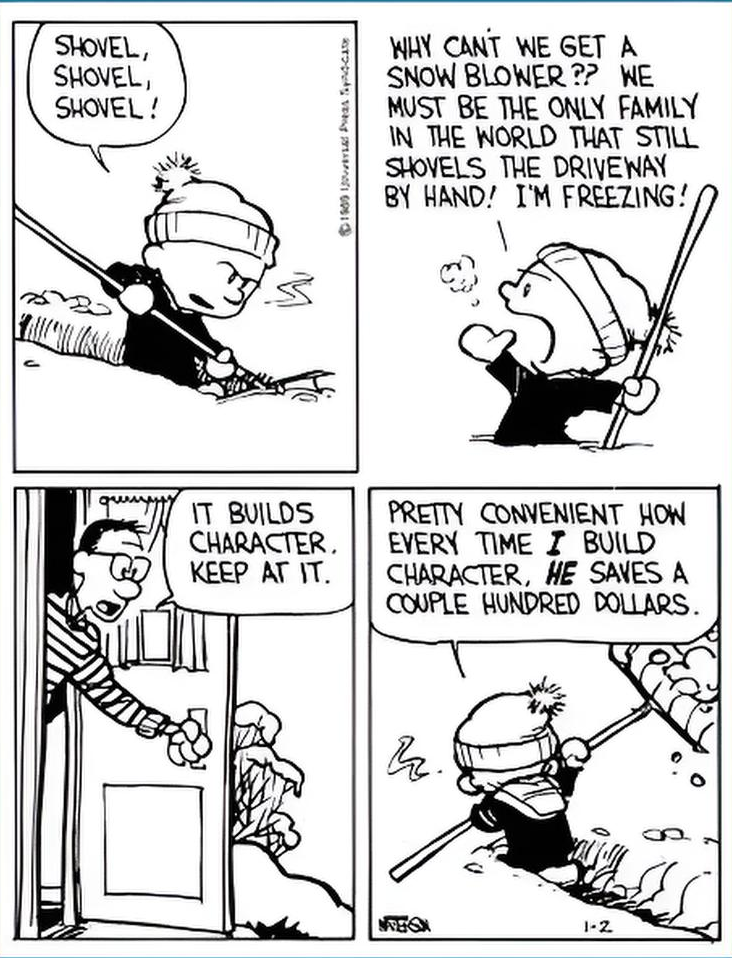
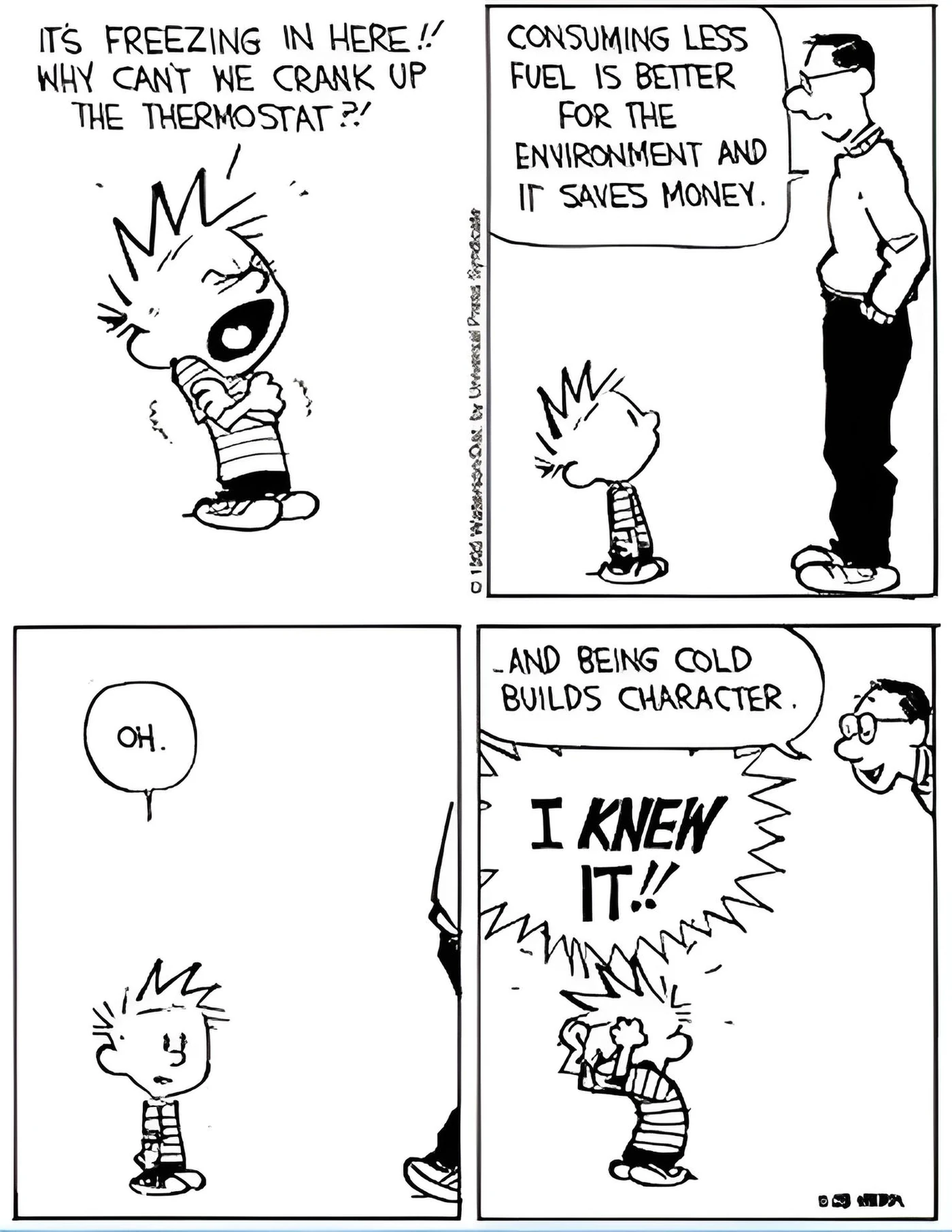
It Builds Character
Sources
Federal Reserve G.17 historical industrial production database
National Income and Product → Kuznets / Kendrick / Gallman series
Peddling Protectionism: Smoot-Hawley and the Great Depression
Econlib (Library of Economics and Liberty), “Hoover’s Economic Policies”